
If you’ve lived through the rollouts, deadlines, and carrier enforcement cycles of the last few years, you’ll know that A2P 10DLC isn’t a “feature” anymore. Rather, it’s infrastructure.
Even in 2026, misunderstanding the mechanics of compliance, campaign approval, and throughput can cost time, money, and delivery performance.
This guide breaks down what 10DLC actually looks like today for aggregators, wholesalers, and technical teams, and what matters operationally.
What A2P 10DLC is in 2026
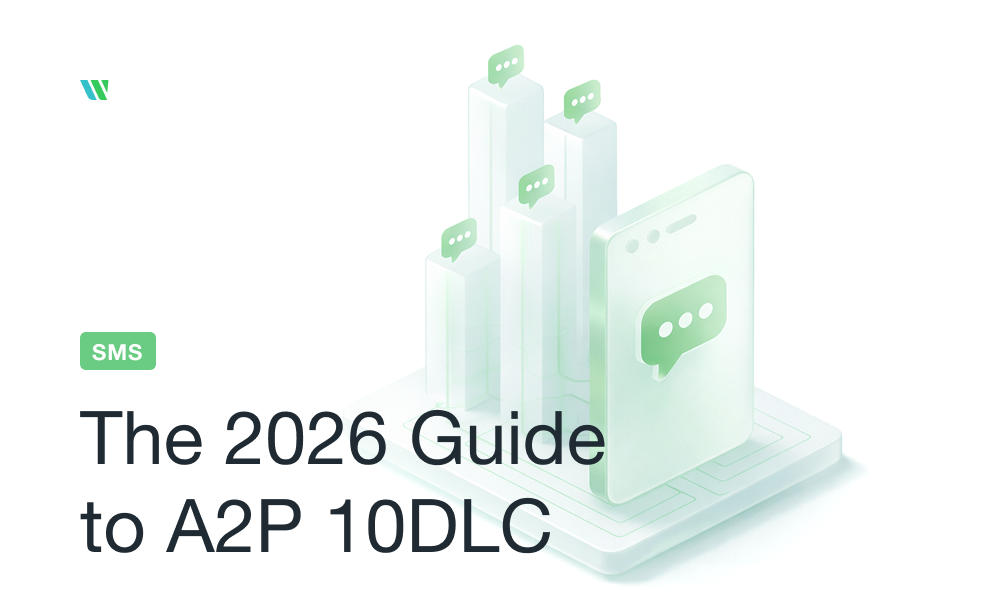
At its core, A2P 10DLC is the carrier-approved framework for business messaging over local long codes in the U.S.
Unlike short codes or toll-free numbers, 10DLC ties traffic directly to brand identity, declared use cases, and campaign-level enforcement.
While industry-wide registration deadlines have long passed, the ecosystem continues to mature and end users remain stuck in a lot of cases.
Through 2025, this was new and it was almost acceptable to not be ready. Today, lots of businesses face the same challenge a year on.
Why? Compliance isn’t static and neither are carrier expectations. For high-volume senders and platforms, 10DLC remains an active operational concern rather than a completed project.
The Current 10DLC Ecosystem
Today’s 10DLC environment is a multi-party system with shared accountability:
- Brands are the businesses responsible for creating campaigns.
- Campaigns define message intent, templates, and throughput expectations.
- Aggregators, wholesalers, and CSPs manage registration flows, traffic routing, and enforcement alignment.
- Carriers apply filtering, throttling, and audits based on declared behavior versus observed traffic.
This layered structure means failures are rarely caused by a single missing field on a form. Instead, friction appears when data is inconsistent across systems or when operational reality drifts from what was approved.
Why Campaign Approval Still Breaks Down
Campaign approval remains one of the most common failure points. And the source of limitless frustration for brands.
Rejections and long review cycles usually aren’t random, however. They stem from patterns:
- Inconsistent brand data across registration fields
- Use cases that blend marketing and transactional traffic
- Template language that doesn’t clearly match declared intent
- Opt-in descriptions that lack specificity
The challenge is that carrier feedback is often limited, making it hard for operations teams to know what to fix without trial and error.
At scale, manual remediation quickly becomes a bottleneck. At a vast scale, everything grinds to a halt.
Operational and Commercial Reality
Approval is only the beginning. Once live, campaigns are subject to:
- Throughput limits determined by campaign type and brand reputation.
- Filtering and throttling when message behavior deviates from approval.
- Variable cost structures, including registration fees, monthly campaign charges, and carrier surcharges.
For high-volume traffic (especially in iGaming, enterprise SaaS, and eCommerce), these factors directly impact delivery rates and customer experience. When issues arise, they look like routing or carrier problems. In reality, the root cause is compliance drift.
What Aggregators and Developers Should Prioritize
In 2026, treating 10DLC as a manual workflow is a liability. Teams should be looking for:
- API-driven automation for brand and campaign lifecycle management.
- Operational transparency into approval status, limits, and enforcement.
- Scalability across multiple customers and use cases.
- Fast onboarding without sacrificing accuracy or compliance.
Though they might look like it on the outside, these aren’t “nice to haves”. They’re genuine requirements for sustaining reliable delivery at volume.
We must no longer gloss over the importance of what was once viewed as a “could have next time” feature when documenting functional requirements.
Your Practical Next Step for A2P 10DLC
A2P 10DLC has settled into its role as long-term infrastructure. And it’s not going anywhere, whether you like it or not.
The teams that succeed are the ones that integrate compliance into their systems, not around them. After understanding the realities outlined here, the next step is choosing tooling that reflects how 10DLC actually operates.
For aggregators, wholesalers, and developers managing high-volume messaging, Wavix’s newly launched A2P 10DLC API is built to address exactly these challenges:
- Simplifying compliance
- Accelerating onboarding
- Supporting scalable messaging in regulated markets
Ready to kick start your 10DLC journey?