
AI innovation is accelerating across Europe but the regulatory environment is evolving just as quickly. With the European Union Artificial Intelligence Act (EU AI Act) coming into force, Voice AI is moving from a loosely governed landscape into a structured regulatory framework. For companies building voice AI agents, appointment-booking bots, or automated customer service systems, understanding the rules is now part of the product roadmap.
For CTOs, product leaders, and compliance teams, the key takeaway is simple: compliance doesn’t start with policy documents; it starts with infrastructure.
If your Voice AI platform isn’t designed with transparency, security, and data residency in mind, meeting EU requirements becomes significantly harder.
What Is the EU AI Act?
The EU AI Act is the European Union’s first comprehensive regulatory framework for artificial intelligence. Rather than regulating all AI systems the same way, the Act introduces a risk-based classification model.
AI applications are categorized into four levels:
- Unacceptable risk
- High risk
- Limited risk
- Minimal risk
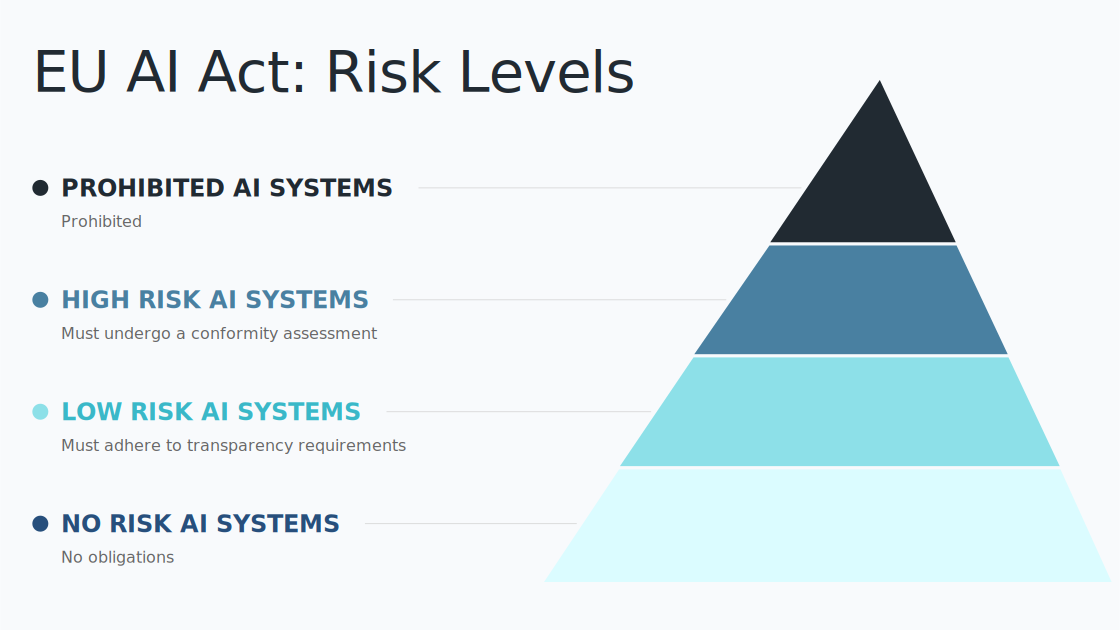
Most Voice AI systems used for customer interactions, like appointment scheduling or automated information services, fall into the Limited Risk category.
Limited-risk AI systems are generally safe to deploy but they must follow a simple requirement: You must inform users they’re speaking to AI.
For example, a voice assistant should begin a call with a message such as:
“This call is powered by an automated AI assistant.”
For most Voice AI builders, compliance becomes less about restricting functionality and more about implementing clear disclosures and responsible data handling.
Why the EU AI act matters for voice AI
While the Act introduces several regulatory considerations, two areas are particularly important for Voice AI developers: transparency and privacy.
Transparency: Users have the right to know they are speaking with AI
The EU AI Act requires companies to be upfront about automated interactions. This means Voice AI systems must disclose their automated nature at the beginning of interactions. The disclosure should be clear, understandable, and delivered before meaningful conversation begins.
For Voice AI platforms, this requirement needs to be built directly into the call flow. If disclosure depends on manual implementation, teams risk inconsistency across deployments.
Relying on a human involves manual error. Baking this into your automated systems ensures it happens 100% of the time and protects both your business and your customers.
Privacy: Voice data must stay within compliant infrastructure
The second critical factor is data residency. Voice conversations can include sensitive information like names, phone numbers, account details, or scheduling data. Under EU regulations, companies must carefully manage where this data travels and where it is processed.
Compliance teams need answers to questions like:
- Which servers handle call routing?
- Where is conversational data stored?
- Which country processes the audio stream?
If voice traffic is routed through non-EU regions, companies could face unnecessary compliance risk and the repercussions of failed compliance (fines, restrictions in doing business, etc.).
The Wavix advantage: Building on a compliant, secure platform
Compliance with the EU AI Act isn’t just about adding policies or disclosures. It requires a technical foundation designed to support regulatory requirements.
That’s where platforms like Wavix provide an advantage.
Domestic EU hosting: Built for data sovereignty
While able to operate globally, Wavix provides dedicated EU infrastructure so that European deployments stay within compliant jurisdictions.
For European businesses, Wavix uses its infrastructure hosted locally within the European Union, ensuring your voice traffic and associated data remain within compliant jurisdictions.
Instead of routing calls through multiple global regions, the platform keeps communications within the EU. For organizations deploying Voice AI in regulated environments, this architecture helps reduce uncertainty around cross-border data flows.
Programmable transparency: Automating AI disclosures
With Wavix Programmable Voice, you can insert disclosure prompts at the beginning of voice interactions to ensure users are clearly informed they are speaking with an AI system.
Because the disclosure is built into the call workflow, you can maintain consistent compliance across applications, updates, and deployments without relying on prompt engineering.
Carrier-grade security: Protecting sensitive voice data
Voice AI systems often process personally identifiable information (PII), meaning the underlying communication infrastructure must be resilient and secure.
Carrier-grade voice networks provide the reliability and security required to support sensitive communications at scale ensuring voice traffic, metadata, and interaction data remain protected throughout the call lifecycle.
Ensure Your AI Roadmap Is Compliant
Compliance is not just about following rules. It’s about ensuring the entire communications “nervous system” is secure enough to handle regulated data
In the very near future, reality will be that if you don’t ensure your AI voice systems are compliant, you will face serious and limiting repercussions.
Planning a future that involves AI voice?